In this issue
What’s New at GMP
AI Is Here: How Associations Are Putting It to Work
GMP On the Move
Board Leadership Spotlight: The Member Experience Is Being Redefined
From Strategy to Execution
Education Corner: Are Associations Leaving Educational Opportunities Untapped?
Governance Insight: Financial Reserves: How Much Is Enough?
Membership Matters: Stop Membership Churn Before It Starts
Revenue Diversification Snapshot: Reducing Reliance on Dues Revenue
Board Question of the Quarter
Catch Up on Episodes of Beyond the Board Room
Find these and additional resources on GMP’s website at www.gmpartners.org. Click on Partner Portal Login in the upper righthand corner, and enter the PW: gmp
What’s New at GMP
AI Is Here: How Associations Are Putting It to Work
Artificial intelligence is no longer something associations are simply talking about—it is becoming part of the everyday toolkit. For GMP, the question is no longer be “Should we use AI?” but rather “Where can AI create meaningful value for our clients and teams?” The goal isn’t to replace the human relationships that make us successful – it’s to give the team more capacity to focus on them.
Associations are already experimenting with AI in some very tangible ways:
- The American Society for Association Executives created a personalized bot named “Stellar” to assist members find information on their website;
- The Water Environment Federation offers an AI-powered resource to help users navigate federation and water-quality information;
- The Missouri State Teachers Association uses an AI assistant called Tillie to help members find information, explore professional development opportunities, and create classroom resources; and
- The American Geophysical Union has developed an AI-powered tool to help identify potential peer reviewers based on expertise and research history.
These examples share an important theme: AI is being applied to solve a specific problem or improve a particular member experience—not simply because AI is the latest technology.
GMP utilizes the Microsoft 365 within a secure and restricted environment which includes Copilot Enterprise. Each team member has access to their own Copilot experience tied directly to their Microsoft 365 account and permissions. Copilot can only access client data the signed-in user has authorization to access so that confidential client information, personally identifiable information, proprietary content, and other sensitive data remains secure.
Access to Copilot has allowed our team to benefit our clients in some very tangible ways:
- Member service: Answering routine questions and helping members quickly find resources.
- Communications: Creating first drafts of emails, articles, social media posts, and other content.
- Meetings and events: Summarizing sessions, analyzing attendee feedback, assisting with logistics, vendor contracting, and helping personalize the member experience.
- Knowledge management: Making years of association resources easier for members and staff to search.
- Data and insights: Identifying patterns in member engagement and turning large amounts of information into useful insights.
Used thoughtfully, AI will help teams work smarter and deliver greater value—while allowing them to spend more time on something technology cannot replace – building relationships, strengthening communities, and advancing the mission.
GMP On the Move
As GMP continues to grow, starting January 1, 2027, we are transitioning from a hybrid workplace model to a fully remote operating model. With team members already working successfully across 14 states, this shift reflects how we operate today which allows us to attract and retain exceptional talent wherever they are located.
For clients, it’s business as usual. Our service model, responsiveness, and points of contact remain unchanged. The only operational update will be a change of address on your website. Your new headquarter address will be a P.O. Box managed by a secure lockbox system. This system elevates the security protocols around managing payments received through the mail. Additionally, GMP will continue to store your physical property in a climate controlled and secure environment. The P.O. Box will be available on November 1st for client use to ensure no disruptions with the collection of payments such as member dues, meeting registrations or sponsorship.
We’re excited about this next chapter and the opportunities it creates to continue delivering exceptional service to our association partners. Contact Janel (janel@gmpartners.org) or JoAnn (joann@gmpartners.org) if you have any questions.
Board Leadership Spotlight: The Member Experience Is Being Redefined
Associations are increasingly competing not only with other organizations but with every digital platform and personalized experience members encounter daily. Today’s members expect relevance, convenience, customization, and year-round value.
Key Takeaways for Boards
- Personalization Is Becoming the New Standard Members increasingly expect content, learning opportunities, and communications tailored to their interests, career stage, and engagement patterns.
Board Question: How are we using member data to create more relevant experiences? - Community Matters More Than Ever Members are seeking connection, peer-to-peer learning, and opportunities to engage throughout the year, not just at conferences and annual meetings.
Board Question: Do we provide meaningful opportunities for members to build relationships and share knowledge year-round? - Learning Must Be Continuous and Flexible The demand for on-demand learning, microlearning, certificates, and skills-based education continues to grow.
Board Question: Does our education portfolio align with how professionals prefer to learn today? - Digital and In-Person Experiences Must Work Together Members increasingly view hybrid engagement as an expectation rather than an enhancement.
Board Question: Are we creating a cohesive experience regardless of how members choose to engage with the association?
From Strategy to Execution
Why Strategic Plans Often Stall
Many organizations invest significant time developing strategic plans but struggle during implementation. Successful associations recognize that strategy execution requires disciplined governance, clear accountability, and regular measurement.
Five Governance Practices That Drive Results
- Establish Clear Ownership: Every strategic priority should have a designated owner responsible for progress.
- Break Long-Term Goals Into Annual Objectives: Boards should focus on measurable milestones rather than waiting until the end of a multi-year plan to evaluate success.
- Monitor Progress Consistently: Include strategic dashboard updates as a standing board agenda item.
- Align Resources With Priorities: Budgets, staffing, and volunteer efforts should directly support strategic objectives.
- Celebrate Wins and Adjust Quickly: Successful boards view strategic plans as living documents and adapt as conditions change.
Board Reflection
Rather than asking: “Did we complete the strategic plan?”
Boards should ask: “What evidence demonstrates we are moving meaningfully toward our strategic outcomes?”
Education Corner: Are Associations Leaving Educational Opportunities Untapped?
Recent industry research suggests many associations may not be fully meeting member expectations for professional development opportunities.
At the same time, educational offerings remain among the most significant drivers of member value, retention, and non-dues revenue.
Areas Boards Should Evaluate
✅ Is our educational content solving current challenges facing members?
✅ Have we diversified beyond traditional conference sessions?
✅ Are we offering learning opportunities throughout the year?
✅ Have we considered certificates, microcredentials, or learning pathways?
✅ Are we measuring educational outcomes and learner satisfaction?
Future-Focused Learning Opportunities
Educational products increasingly include:
- On-demand courses
- Microlearning modules
- Certificate programs
- Digital credentials
- AI-supported simulation learning
- Subscription-based learning libraries
Several of these opportunities also provide meaningful non-dues revenue potential. The GMP revenue diversification framework identifies digital learning and education products as one of the strongest opportunities for both organizational impact and scalable revenue growth.
Governance Insight: Financial Reserves: How Much Is Enough?
A question frequently raised by boards is: “How much should our organization maintain in reserves?” The answer depends on organizational structure, revenue model, and risk profile.
Important Reminder
The IRS does not impose a specific reserve cap for either 501(c)(3) charitable organizations or 501(c)(6) associations. The key expectation is that reserves are reasonable, mission-related, and properly documented.
Common Reserve Targets
- 501(c)(3) Organizations Best practice is often 3 to 6 months of operating expenses.
- 501(c)(6) Associations Many associations maintain 6 to 12 months of operating expenses due to greater dependence on dues, sponsorships, and events.
Boards Should Ensure They Have
- A written reserve policy
- Defined reserve targets
- Approved uses of reserve funds
- Replenishment requirements
- Annual policy review
Strong reserve policies support organizational stability and responsible stewardship.
Membership Matters: Stop Membership Churn Before It Starts
Research consistently shows that members rarely leave without reason. Retention is often influenced long before the renewal notice arrives.
Early Indicators of Membership Risk
- Declining event participation
- Reduced engagement with communications
- Limited volunteer involvement
- Underutilization of member benefits
- Lack of meaningful connections within the community
Board Discussion Topic
Rather than focusing solely on renewal rates, boards should examine: “What is our strategy for strengthening engagement between renewals?”
Organizations that create ongoing value and meaningful connections typically see stronger retention and member satisfaction.
Revenue Diversification Snapshot: Reducing Reliance on Dues Revenue
Forward-thinking associations continue to expand beyond traditional dues and annual meeting revenue. Potential opportunities include:
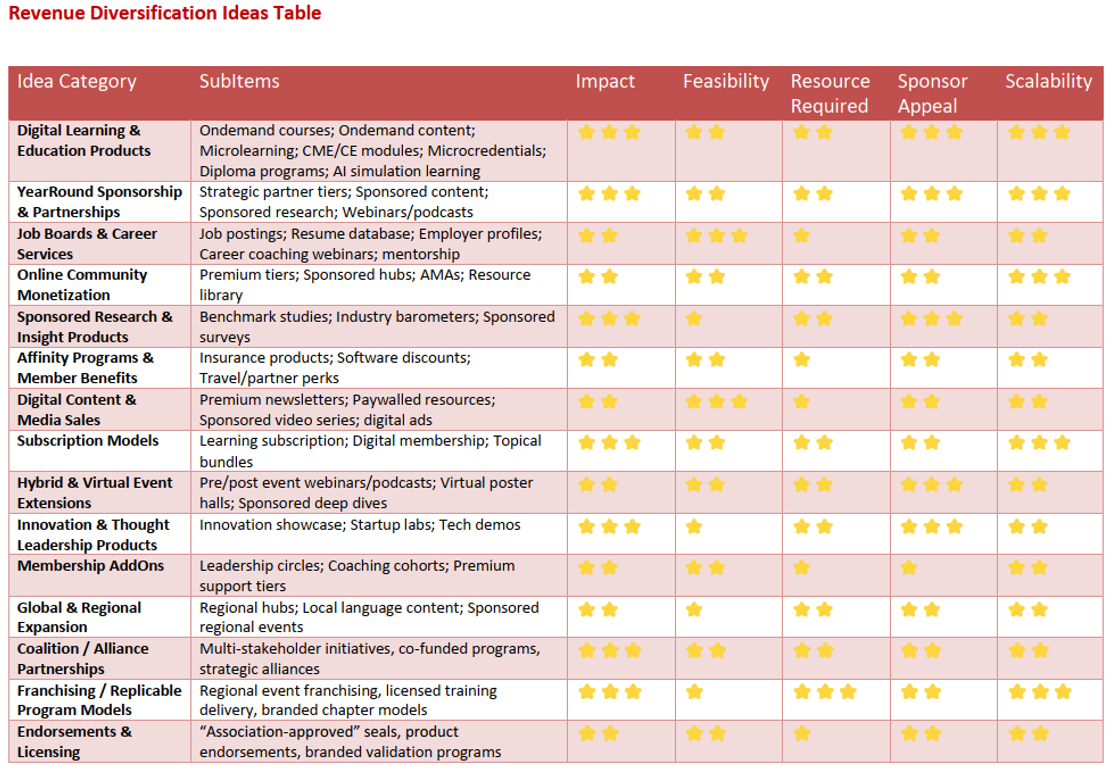
These approaches can strengthen financial sustainability while enhancing member value.
Board Question of the Quarter
If your association could only invest in one initiative next year, which would generate the greatest long-term impact?
- Member engagement?
- Professional development?
- Technology modernization?
- Advocacy?
- Revenue diversification?
- Research and thought leadership?
The most effective boards spend time discussing not only what they will do, but what they will choose not to do.
GMP Perspective
The associations that are thriving today share several common characteristics:
- Strategic boards focused on outcomes rather than operations
- Robust reserve and risk management practices
- Diverse revenue streams
- Continuous and flexible learning programs
- Thoughtful member engagement strategies
- Data-informed decision making
As always, GMP remains committed to helping your organization build a strong foundation for sustainable growth and mission impact.
Questions about any of these topics? We welcome the opportunity to discuss them with your board or finance committee during an upcoming meeting.
Catch Up on Past Episodes of Beyond the Board Room
Episode 1 GMP Beyond the Board Room Governance & Fundamentals.mp4
Episode 2 GMP Board Fiduciary Responsibilities Explained.mp4
Episode 3 The Board and GMP Partnership.mp4
Episode 4 Board Meetings and Decision Making.mp4
Episode 5 Roberts Rules of Order.mp4
Find these and additional resources on GMP’s website at www.gmpartners.org. Click on Partner Portal Login in the upper righthand corner, and enter the PW: gmp
Thank you for taking the time to read our newsletter. We look forward to continuing our journey together and achieving new heights of success. Please do not hesitate to connect with us at janel@gmpartners.org or joann@gmpartners.org.